
coa
HPLC Purity: What The Number On A Peptide COA Means
HPLC purity is the share of the detected signal that belongs to the target peptide. How it is measured, how to read the chromatogram, and what the number does not tell you about identity or content.
- Lavi MD
- November 24, 2026
- 3 min read
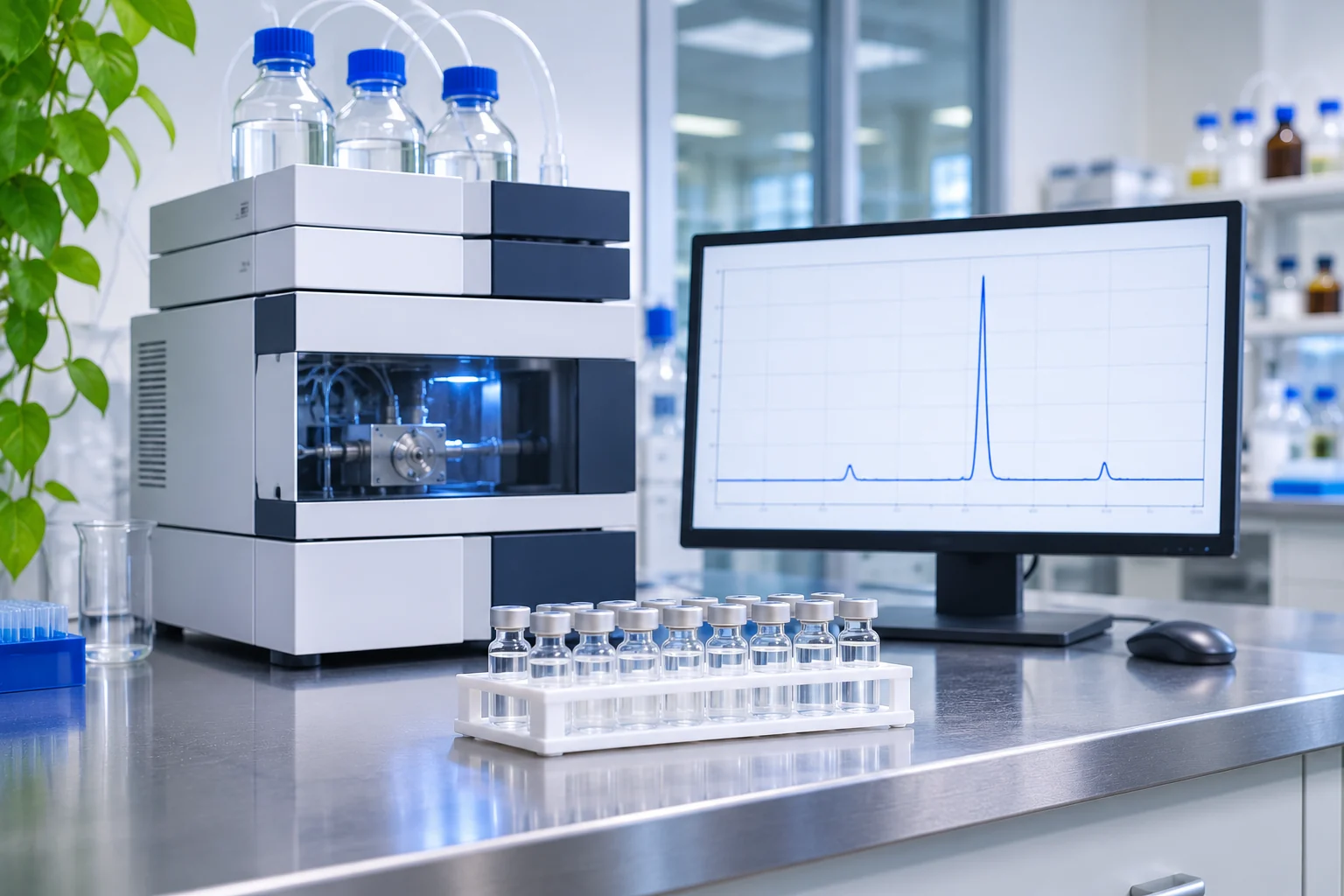
HPLC purity is the percentage of a sample that shows up as the main compound when it is run through high performance liquid chromatography (HPLC). On a peptide certificate of analysis, a line like "Purity (HPLC): 98.7%" means that, of everything the detector picked up, 98.7% of the signal (the peak area) belonged to the target peptide and the rest belonged to other substances, such as shorter sequences left over from synthesis.
This page explains how HPLC purity is measured, how to read the chromatogram behind the number, and what the figure does and does not tell a buyer. It covers documentation only.
How HPLC Works, In Brief
HPLC pushes a dissolved sample under high pressure through a column packed with fine particles. Different molecules interact with the column differently, so they come out (elute) at different times. A detector at the end, usually UV for peptides, records a signal over time. The result is a chromatogram: a graph with a peak for each compound that was separated.
How The Purity Number Is Calculated
The lab identifies the main peak (the target peptide) and measures the area under it. Purity is that area divided by the total area of all peaks, expressed as a percentage. This is often called area percent purity. Two things follow from it:
- It is relative. It compares the main peak with everything else the detector saw, under that method.
- It depends on the method. The column, solvents, gradient and detection wavelength all affect how well impurities are separated and seen.
How To Read The Chromatogram
- Look for one dominant peak. A clean result shows one tall main peak with small or no side peaks.
- Check the peak table. Most reports list each peak's retention time and area percent. The main peak's area percent should match the purity figure.
- Note the retention time. It should be consistent between lots tested with the same method.
- Read the method details if they are listed: column, wavelength and gradient.
A report that states a purity number with no chromatogram attached gives you much less to go on.
What HPLC Purity Does Not Tell You
- Identity. HPLC shows how pure a sample is, not that the main peak is the right molecule. Identity is usually confirmed by mass spectrometry (MS), which checks the molecular weight. Look for both lines on a COA.
- Content. Area percent is not the same as the amount of peptide per vial. Net peptide content and fill amount are separate lines.
- Water and salts. Moisture and counter ions are measured by other tests. See what lyophilized means on a COA for the moisture line.
HPLC Purity On A Lavi MD COA
Each lot we supply has a certificate of analysis with its purity, identity and lot details, available in our COA library. Our guide to reading a peptide COA walks through every other line. Browse the product catalog, such as TB-500 and Thymosin Alpha-1, or contact our team for wholesale accounts. New to sourcing? Read the wholesale buyer overview.
Research Use Only
All Lavi MD peptide products are sold for research purposes to qualified wholesale accounts. Nothing in this article is medical advice or guidance on use. This page explains documentation terms only.