
coa
Lyophilized Peptides: What The Term Means On A COA
What lyophilized (freeze dried) means for a peptide, why products are supplied that way, and which COA lines go with it: appearance, moisture, lot and storage.
- Lavi MD
- November 23, 2026
- 4 min read
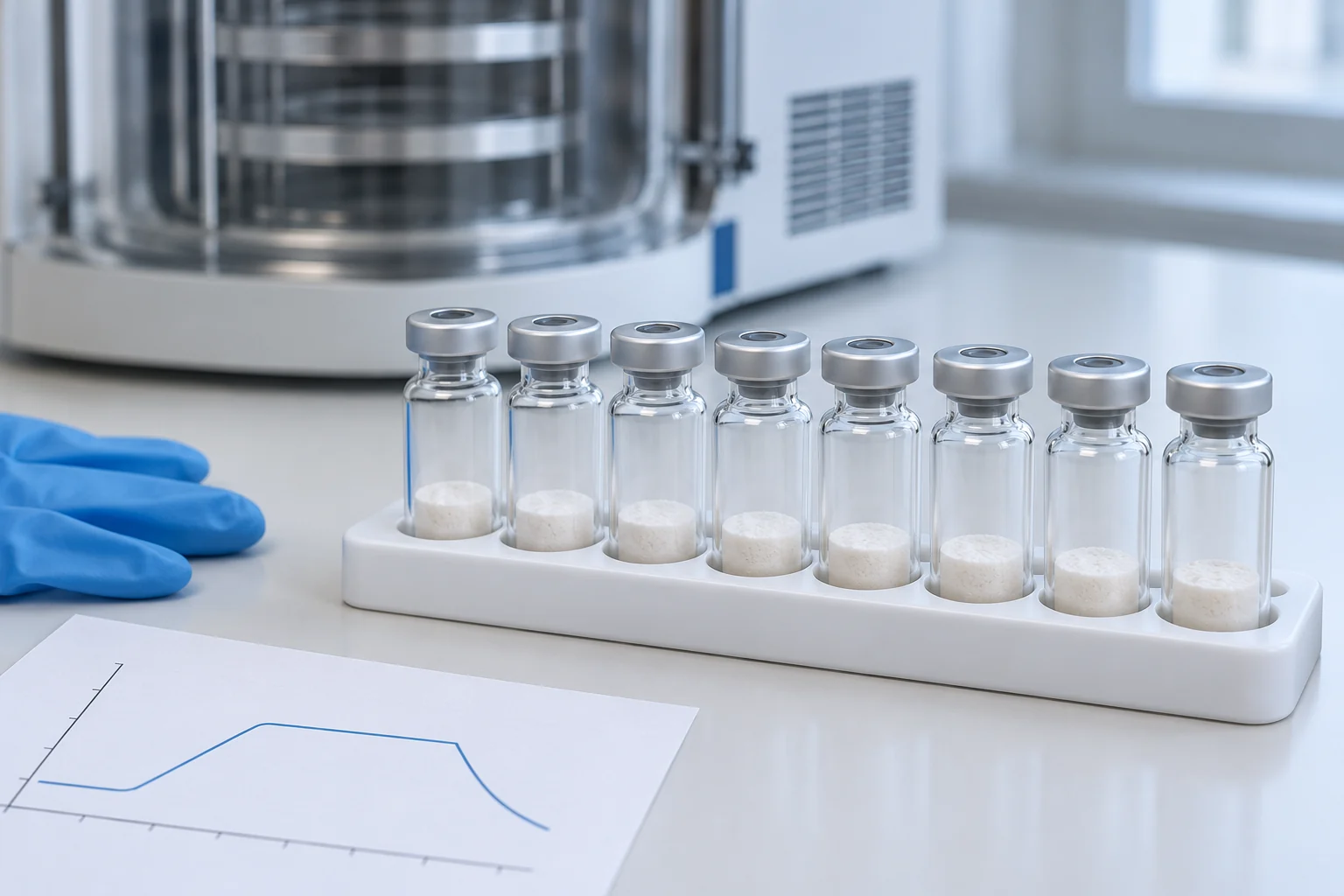
A lyophilized peptide is a peptide that has been freeze dried: frozen first, then dried under vacuum so the water leaves as vapor, which leaves a dry solid in the vial. When a label or a certificate of analysis says "lyophilized," it is describing that physical form. It does not, on its own, say anything about identity or purity.
This page explains what the term means, why manufacturers choose it, and which lines on a peptide COA relate to it, so a wholesale buyer knows what to look for and what to ask. It is written for documentation and purchasing teams.
What Lyophilization Means
The FDA's inspection guide on lyophilization describes it as a process in which water is removed from a product after it is frozen. The guide breaks it into three stages that depend on each other:
- Freezing. The solution in the vial is frozen solid.
- Primary drying (sublimation). Under vacuum, the frozen water turns straight into vapor without passing through a liquid stage.
- Secondary drying (desorption). Water still bound to the solid is driven off to bring the remaining moisture down further.
What is left is often called the "cake": the dry, usually white solid you see at the bottom of a sealed vial.
Why Peptides Are Supplied In Lyophilized Form
The same FDA guide gives the main reason plainly: products are made in lyophilized form because they are unstable in solution, and a dry powder is more stable. Many peptides fall into that group. For a buyer, the practical effect is on storage and shipping requirements, which is why the storage conditions printed on the label and the COA matter as much as the purity figure.
Where "Lyophilized" Shows Up On A COA
A COA for a lyophilized product usually has a few lines that only make sense for a dry form. These are the ones to read:
- Appearance. Often written as something like "white lyophilized powder" or "white cake." The FDA guide lists the correct volume of cake and its appearance among the critical things to check in finished vials.
- Water content or moisture. The FDA guide calls the amount of moisture in vials an obvious concern for any lyophilized product, and expects manufacturers to set moisture specifications for release and for stability. On a COA this is often reported as a percentage. Karl Fischer titration is a common method: it measures trace amounts of water in a sample.
- Identity and purity. These still come from the same tests as any other peptide, usually mass spectrometry for identity and HPLC for purity. The COA guide linked above covers both.
- Lot number and storage conditions. The lot on the COA must match the lot on the vial, and the storage line should match what the label says.
Lyophilized Vs Liquid: What Changes For Documentation
A liquid product and a lyophilized product can carry the same peptide, but their paperwork is not interchangeable. A liquid product has no cake and no moisture specification; it will usually carry other lines, such as pH or volume. A lyophilized product should show appearance and water content. If a COA for a lyophilized vial is missing both, ask why.
Lavi MD lists products by format, including injectables such as TB-500 and Thymosin Alpha-1, nasal sprays, capsules and creams. Each product page states its format and that a COA is available on request. Please confirm the exact format of any SKU with us before you place a wholesale order; do not rely on this article for a specific product.
Red Flags On A Lyophilized Product COA
- "Lyophilized" in the product name, but no appearance or moisture line in the results.
- A moisture result with no specification or limit printed next to it.
- No lot number, or a lot number that does not match the vial label.
- No testing laboratory named, and no date or signature.
- Storage conditions on the COA that contradict the label.
None of these prove a problem with the batch. They are documentation gaps, and a supplier should be able to close them with a complete report.
Questions To Ask A Supplier
- Is this SKU supplied lyophilized or as a liquid?
- Can you send the COA for the exact lot we will receive?
- What moisture specification does the batch release against, and what was the result?
- Which laboratory ran identity and purity, and is it independent of the manufacturer?
- How is the product shipped and stored before it reaches us?
Lavi MD ships cold chain and provides a COA on request for every product. Our lab reports page is where third party reports will be posted. For lot specific documents, contact our team. If you are new to sourcing, the wholesale buyer overview explains how accounts and pricing work.
Research Use Only
All Lavi MD peptide products are sold for research purposes to qualified wholesale accounts. Nothing in this article is medical advice or guidance on use. This page explains documentation terms only.