
peptides
Research Peptides: A Wholesale Buyer Overview
Peptide chemistry, how research peptides are synthesized and purified, and the analytical documentation a licensed wholesale buyer should expect with every lot.
- Lavi MD Editorial Team
- June 4, 2026
- 2 min read
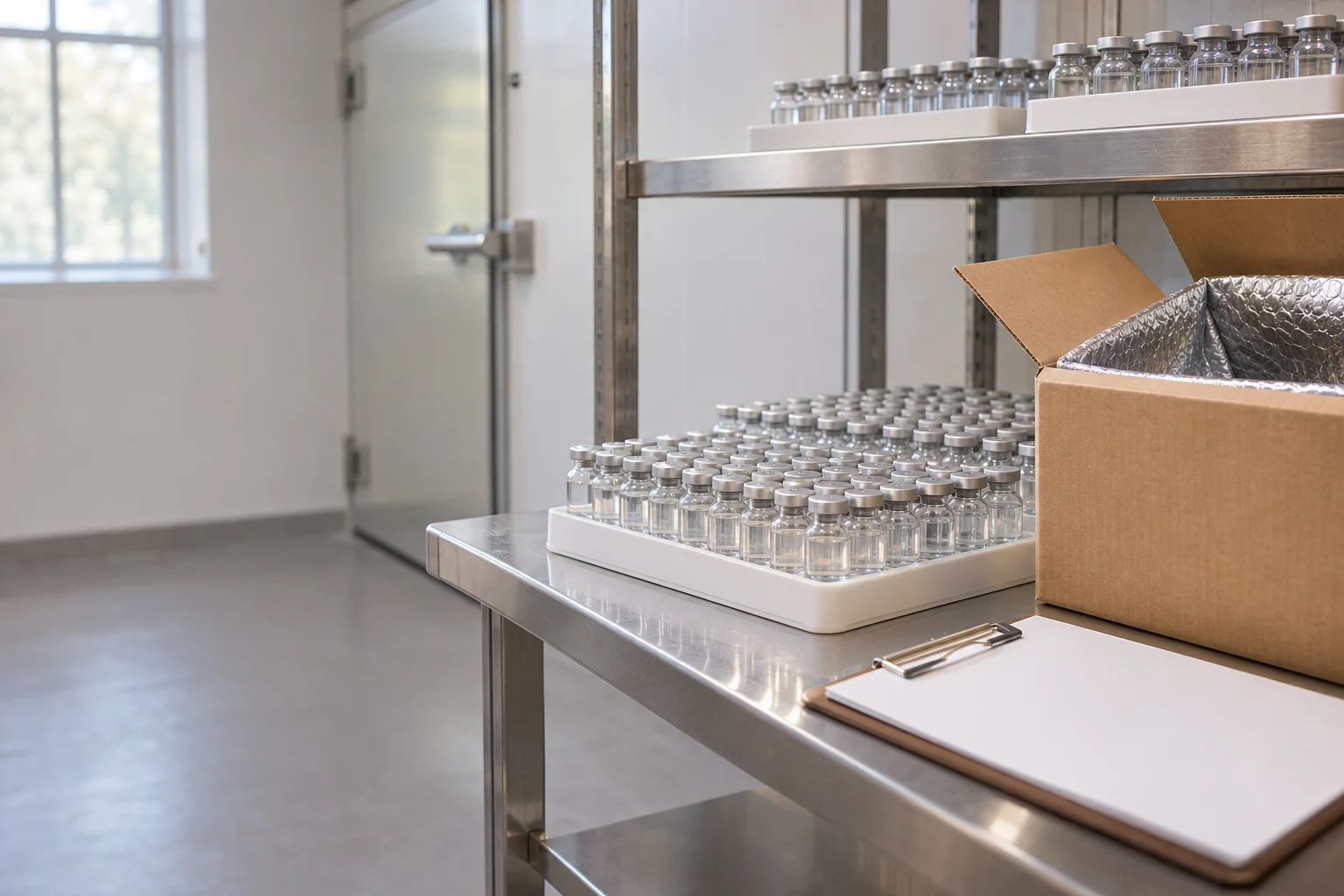
Peptides are short chains of amino acids joined by peptide bonds, generally fewer than about 50 residues. This overview covers the chemistry of the class, how research peptides are produced and supplied, and the analytical documentation a wholesale buyer should expect with each lot. It is written for licensed laboratory and institutional buyers and makes no statement about the use or effects of any compound.
Peptide Chemistry In Brief
A peptide is defined by its sequence: the order of amino acids from the N terminus to the C terminus. Sequence determines molecular weight, charge at a given pH, hydrophobicity and the residues most prone to degradation. Methionine and cysteine are susceptible to oxidation, asparagine and glutamine to deamidation, and sequences rich in hydrophobic residues can aggregate in solution. Many research peptides are also modified, for example by C terminal amidation, acetylation or a copper complex as in GHK-Cu, and each modification changes the expected mass.
How Research Peptides Are Produced
Most catalog peptides are made by solid phase peptide synthesis, in which amino acids are added one at a time to a chain anchored on a resin, then cleaved and purified, typically by preparative reverse phase HPLC. The purified material is lyophilized (freeze dried) to a powder, which is the form most suppliers ship. Synthesis can leave truncated or deletion sequences, so the purification step and the analysis that follows are what separate one lot from another.
What The Documentation Should Show
Every lot should come with a certificate of analysis. At a minimum it reports identity by mass spectrometry, with observed mass against theoretical mass, and purity by analytical HPLC, with the chromatogram and the method conditions. A complete COA also states the lot number, test date, the laboratory that ran the analysis, and, where tested, endotoxin and residual solvent results. Our article on what a peptide COA shows covers each section in detail, and current lot documents are listed on the lab results page.
Storage Conditions On The Documentation
Lyophilized peptides are generally more stable than peptides in solution, and suppliers specify cold storage and protection from moisture and light. The storage conditions that apply to a given lot are the ones stated on its label and COA, and a wholesale buyer should confirm that cold chain conditions were kept through distribution.
The Catalog
The catalog groups compounds by research area. Examples include TB-500, Thymosin Alpha-1, Tesamorelin, Sermorelin, Semax, Selank and Pinealon. The full list is on the products page, and the blog covers documentation and sourcing topics.
Wholesale Accounts
Wholesale access is limited to licensed buyers. To open an account, apply for wholesale, or contact the team to request documentation for a specific lot before ordering.